



You've Heard the Whispers About Slippery Elm
Your friend mentioned it at book club. Your naturopath brought it up. Maybe you found it in a Reddit thread at 2 a.m., squinting at your phone, wondering if this might finally be the answer.
But here's what you actually want to know: What even is slippery elm mucilage? Does it actually work? And more importantly — is it worth your time and money when you've already tried so much?
I get it. You're skeptical. You should be.
Let me break down slippery elm mucilage explained in a way that actually makes sense — no fluff, no marketing speak, just the science and the honest truth about whether it belongs in your wellness routine.
What Is Slippery Elm Mucilage, Really?
Slippery elm mucilage explained starts here: it's not a trendy supplement invented last Tuesday.
Slippery elm (Ulmus rubra) is a tree that's been used by Native Americans and herbalists for literally centuries. The magic is in the inner bark — the part between the hard outer shell and the wood. When that inner bark gets processed, it releases compounds called mucilages.
Think of mucilage like nature's slime. It's a thick, gel-like substance that coats and protects.
When you take slippery elm, you're essentially swallowing a soothing coating agent. It travels through your digestive system, creating a protective layer along your gut lining. And here's where it gets interesting for you: your gut health and your hormone metabolism are actually connected.
That's not woo-woo. That's your estrobolome — the community of bacteria in your gut that helps regulate estrogen.
Why Your Gut Matters More Than You Think
You've probably heard "gut health" thrown around so much it sounds meaningless. But for women in midlife and beyond, your gut isn't just about digestion or bloating (though it affects both).
Your estrobolome — the collection of bacteria in your digestive tract — plays a quiet but crucial role in how your body processes and recycles estrogen. When your gut lining is compromised or inflamed, your estrobolome can't do its job well. That ripples outward: less stable estrogen, more symptoms.
Slippery elm mucilage explained in this context: it supports your gut lining's integrity.
When the mucilage coats your gut, it helps reduce inflammation and supports the protective barrier. A healthier barrier means a healthier estrobolome. And a healthier estrobolome means your body has a better shot at regulating its own estrogen naturally — the way it should.
You're not adding hormones. You're supporting your body's own system.
This matters. Especially if you've been told that everything you're experiencing is "just aging" and there's nothing to do but live with it.
How Slippery Elm Mucilage Works Inside Your Body
Here's the pathway that matters:
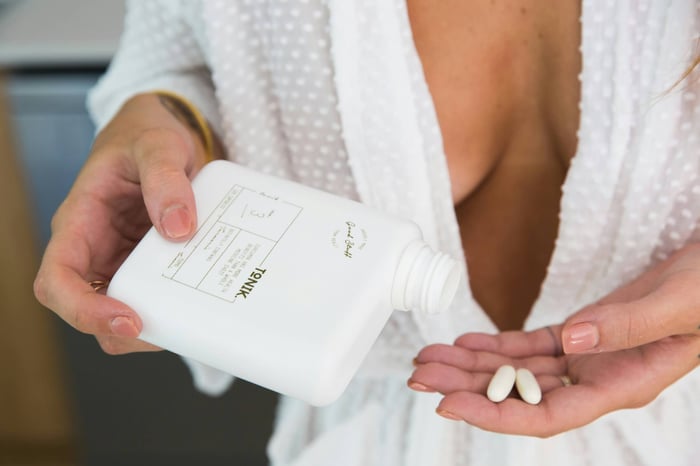
Step 1: Coating. When you take slippery elm (usually as a capsule), the mucilage dissolves as it moves through your digestive tract. It creates a protective coating along your gut lining, like a soothing blanket.
Step 2: Inflammation support. That coating helps calm irritation and supports your gut barrier. A compromised gut barrier (sometimes called "leaky gut") lets unwanted particles through, which triggers inflammation. Slippery elm helps shore up the defenses.
Step 3: Estrobolome support. With a healthier gut environment, your beneficial bacteria can thrive. Your estrobolome works better. Estrogen metabolism improves.
Step 4: Systemic support. Here's the connection most people miss: when estrogen metabolism improves, your body can better regulate estrogen throughout your system — including in tissues that affect vaginal health, skin elasticity, and overall moisture balance.
You're working from the inside out. Not applying creams and hoping they stay put. Actually addressing the root.
Slippery elm mucilage explained this way — it's not magic. It's physiology.
Explore Natural Feminine Health Support
Flower Power offers hormone-free supplements designed for women's intimate wellness.
What to Actually Look For in a Slippery Elm Product
Not all slippery elm is created equal. And if you're going to try this, you deserve to know what makes a difference.
Source matters. Look for slippery elm that's been wild-harvested or sustainably sourced. This isn't just environmental ethics (though that's good too). Wild-harvested plants often have more robust active compounds.
Processing is everything. The heat applied during processing can destroy the very mucilages you're taking it for. Cold-processing — below 45°C — preserves the active compounds. Check the label or contact the company. If they won't tell you, that's a red flag.
Inner bark only. The outer bark gets stripped away (a process called "rossing") because the active compounds are concentrated in the inner bark. If the product doesn't specify "inner bark," you might be getting filler.
Harvest timing. Spring harvesting during a narrow window (roughly 12 weeks) captures peak potency. This detail separates products made with care from products made with convenience.
Capsules over powders. Powders are cheap and easy — but they oxidize faster, and you have to mix them with liquid. Capsules protect the compound and make consistency simple.
You're worth the extra 30 seconds of label reading.
Common Mistakes Women Make With Slippery Elm
You can have the best slippery elm on the planet and still not see results if you're using it wrong.
Expecting overnight changes. Your gut barrier didn't get compromised in a week. It won't rebuild in a week either. Give it at least 8-12 weeks. Your estrobolome needs time to rebalance.
Inconsistency. This is the biggest one. You take it for three days, skip four, take it for two more. That's not a trial. That's wishful thinking. Two to three capsules daily, every day, for at least two months. Then assess.
Ignoring gut health otherwise. Slippery elm is one tool. But if you're still eating ultra-processed foods, not drinking water, and living on cortisol, the mucilage can't work miracles. It supports; it doesn't override.
Taking it with the wrong things. Slippery elm can interfere with medication absorption. Take it 2-3 hours away from any prescriptions. And talk to your doctor first (more on that in a second).
Assuming it works for everyone equally. Individual results may vary. Your neighbor's friend might see changes in four weeks. You might need twelve. Both are normal.
When to See Your Doctor
This is non-negotiable: slippery elm is a support tool, not a replacement for medical care.
See your doctor if:
- You're on any medications (slippery elm can affect absorption)
- You have a diagnosed digestive condition like IBS or Crohn's disease
- You're pregnant or breastfeeding
- You have a tree pollen allergy (elm pollen sensitivity is rare but possible)
- Your symptoms aren't improving after 12 weeks of consistent use
Your doctor isn't there to dismiss your experience. She's there to make sure you're safe and that nothing else is being missed. A good doctor will support you exploring evidence-informed natural options alongside conventional medicine, not instead of it.
Slippery Elm Mucilage Explained: Your Questions Answered
Is slippery elm the same as elm bark?
Not quite. Slippery elm is the tree (Ulmus rubra). The inner bark is what we use. When you see "slippery elm extract" or "slippery elm mucilage," you're getting the processed inner bark. Regular elm bark might be outer bark, which has fewer active compounds.
Can I just buy it at the grocery store?
You might find it in a health food store, but quality varies wildly. Your best bet is a company that specializes in women's health and is transparent about sourcing and processing. They care about the details that actually matter.
How long until I notice a difference?
Most women report noticing changes around 6-8 weeks with consistent use. Some take longer. Individual results may vary. But if you're going to try this, commit to two months minimum before deciding it's not for you.
Will it interact with my medications?
Possibly. Slippery elm can slow absorption of some drugs. Take it 2-3 hours apart from any prescriptions. And always mention it to your doctor — not to get permission, but to be safe.
Is it safe if I'm a breast cancer survivor?
Slippery elm itself isn't a hormone. It supports your gut, which indirectly supports estrogen metabolism. But if you've had hormone-sensitive cancer, talk to your oncologist before starting anything new. They know your specific situation better than anyone online.
What if I have a sensitive stomach?
Start with one capsule daily for a few days. Some people experience mild loosening of stools at first — that's the coating doing its job and clearing things out. It usually settles within a week. If it doesn't, that's information. Listen to your body.
The Bottom Line: Why This Matters
You've been told you're "just getting older." That your body is supposed to feel this way. That there's nothing to do but accept it.
That's not entirely true.
Your body still has agency. Your estrobolome can still be supported. Your gut can still be healed. And when you address the root — not just the symptom — real change becomes possible.
Slippery elm mucilage explained comes down to this: it's one of the oldest, most researched natural supports for gut health. It's not a cure. It's not a replacement for medical care. But it's a legitimate tool backed by centuries of use and modern understanding of gut-hormone connection.
If you've tried everything else and nothing stuck, it might be worth your time. But do it right. Get quality. Be consistent. Give it time.
You deserve to feel like yourself again.
Explore Our Products
Flower Power offers hormone-free supplements to help balance pH, eliminate odor, and increase moisture — all backed by our 90-day money-back guarantee.
These statements have not been evaluated by the Food and Drug Administration. This product is not intended to diagnose, treat, cure, or prevent any disease.
Sources
- National Institutes of Health. (2023). "The Human Microbiome Project: Estrobolome and Estrogen Metabolism." NIH National Library of Medicine.
- Mayo Clinic. (2022). "Gut Microbiome and Women's Health: Understanding the Connection." Mayo Clinic Women's Health.
- American Botanical Council. (2021). "Slippery Elm (Ulmus rubra): Traditional Use and Modern Evidence." HerbalGram Journal.
- ACOG (American College of Obstetricians and Gynecologists). (2023). "Complementary and Alternative Medicine in Women's Health." ACOG Patient Education.