



You're Not Imagining It — And You're Not Alone
Sex after 60 is it normal to feel... different? Yes. Uncomfortable sometimes? Also yes. And the fact that you're asking the question at all tells me something important: you still want this part of your life to feel good.
Let's be real. Nobody prepared you for this. Your gynecologist probably dismissed it with "that's just aging." Your partner maybe got quieter about it. And somewhere along the way, you started wondering if this is just how it's supposed to be now — or if something's actually wrong.
The answer is neither.
Sex after 60 absolutely can be normal, pleasurable, and deeply connected. But it often requires you to understand what's actually happening in your body — and to stop accepting half-measures that don't work.
What's Actually Happening Down There
After menopause, your estrogen drops. Like, significantly. And here's what nobody tells you: estrogen isn't just about hot flashes and mood swings. It directly affects vaginal tissue elasticity, blood flow, and natural lubrication.
When estrogen declines, vaginal tissue becomes thinner and drier. The vaginal lining loses some of its resilience. Arousal takes longer to build. And what used to happen naturally now feels like it requires negotiation.
This isn't a moral failing. It's not about your desire or your partner's attractiveness. It's biology. And it's completely reversible — or at least manageable — when you know what to do about it.
The medical term is "genitourinary syndrome of menopause" (GSM). But you probably know it as: "Why does sex hurt now?" or "Why do I feel so dry?" or the question nobody wants to ask their doctor: "Is this normal?"
It is. And you're not broken.
Why This Matters — Beyond the Bedroom
Here's what the wellness industry won't tell you: your sexual health isn't separate from your overall health. It's woven through your cardiovascular system, your pelvic floor, your confidence, and your relationship.
Regular sexual activity improves blood flow to vaginal tissue, which naturally supports moisture and elasticity. It strengthens pelvic floor muscles. It releases oxytocin — the "bonding" hormone that keeps you connected to your partner. And yes, it feels amazing, which matters for its own sake.
But when sex becomes uncomfortable or difficult, you stop wanting it. And then you stop doing it. And then the tissue becomes even less elastic, blood flow decreases further, and you're stuck in a cycle that only gets worse.
This isn't inevitable. You can break that cycle.
The other thing that matters: you deserve to have a sexual life that feels good at 60, 65, 70, and beyond. Not "good for your age." Not "better than nothing." Good. Full stop.
How Your Body Can Support Natural Moisture and Elasticity
Your body has its own built-in capacity to produce vaginal moisture — but menopause disrupts the signaling system that makes it happen.
This is where most solutions fail. Topical lubes? They wash away. They're temporary band-aids. They don't address the actual problem.
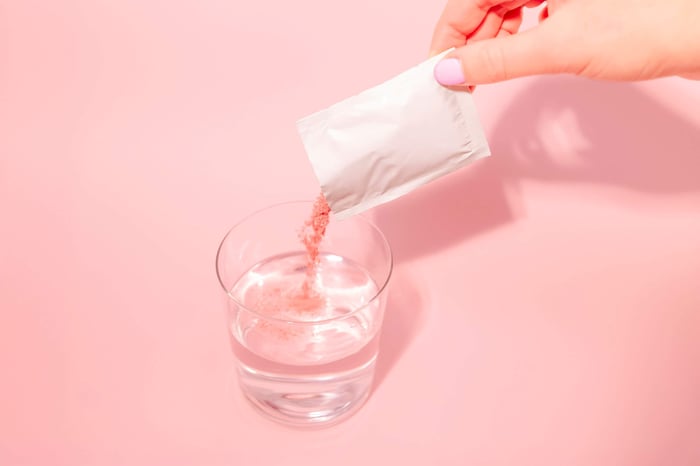
What actually works is supporting your body's ability to produce its own moisture from the inside out.
Your gut microbiome (specifically the estrobolome — the bacteria that help metabolize estrogen) plays a huge role in how much estrogen your body can actually use. When the estrobolome is thriving, your body is better able to maintain estrogen-dependent tissues, including vaginal health.
That's why some women find relief with targeted supplements that support gut health and estrogen metabolism, combined with consistent sexual activity and sometimes localized support (prescription creams, if needed).
The combination works. One alone often doesn't.
Explore Natural Feminine Health Support
Flower Power offers hormone-free supplements designed for women's intimate wellness.
What to Look For — Red Flags vs. Normal Changes
Okay, so some changes are expected. Some are not.
Normal after 60:
- Needing more time for arousal
- Needing lubricant (especially water-based or silicone-based)
- Mild dryness that improves with consistent sexual activity
- Slight changes in sensation
When to see your doctor:
- Severe pain during or after intercourse (not just discomfort)
- Heavy bleeding or unusual discharge
- Vaginal bleeding after menopause
- Signs of infection (burning, strong odor, thick discharge)
- Pelvic pressure or heaviness that affects daily life
- Pain that doesn't improve with lubricant or after a few weeks of consistent activity
You don't have to white-knuckle through this alone. Your gynecologist can evaluate for infections, pelvic floor dysfunction, or other treatable conditions. Some women benefit from localized estrogen therapy (a cream or ring), which is different from systemic HRT and may be appropriate even if you've chosen not to take hormones systemically.
Common Mistakes That Make Things Worse
Avoiding sex because it's uncomfortable. I know this sounds counterintuitive, but consistent sexual activity actually improves blood flow and tissue elasticity over time. A few weeks of using lubricant + continuing sexual activity often leads to noticeable improvement. Stopping completely? That's when things get tighter and drier.
Blaming yourself or your relationship. You're not less sexy. Your body isn't broken. Menopause is a metabolic change, not a character flaw. Your partner probably wants things to feel good for you, too. Talk about it.
Assuming prescription HRT is the only answer. For some women, systemic HRT is the right choice. For others (especially breast cancer survivors), it's not an option. There are many other approaches — from localized estrogen therapy, to supplements that support estrogen metabolism, to pelvic floor physical therapy, to simply giving your body time and consistency.
Using cheap lubes or the wrong type. Oil-based lubes damage condoms. Some water-based lubes dry out quickly. Silicone-based lubes last longer but can feel different. Experiment and find what works for your body and your situation.
Waiting years to address it. I get it. It feels embarrassing. But the longer you avoid treatment, the more the tissue changes, and the longer recovery takes. Address it now.
FAQ: Sex After 60
Is it normal to lose interest in sex after menopause?
Some decrease in libido is common — partly hormonal, partly psychological (if sex has become uncomfortable, you naturally want it less). But complete loss of interest isn't inevitable. Many women find their sexuality actually deepens after 60 when they're not worried about pregnancy and have more confidence about what they want.
Can sex after 60 actually feel good?
Yes. With lubrication, consistent activity, sometimes pelvic floor physical therapy, and addressing any underlying hormonal changes, most women report that sex feels good again — often differently than before, but good. Individual results may vary.
Do I need HRT to have normal sex after 60?
No. Some women choose HRT and find it helpful for multiple menopausal symptoms (including sexual health). Others manage beautifully without it, using lubrication, supplements that support estrogen metabolism, and consistent sexual activity. Talk to your doctor about what's right for your situation.
What if my partner doesn't understand?
Communication helps. Explain that this isn't about attraction — it's a physiological change. Most partners are relieved to understand it's solvable. Consider asking your doctor to explain it in a medical context if that helps your partner take it seriously.
Is vaginal dryness after 60 permanent?
Not necessarily. With consistent activity, appropriate lubrication, and sometimes supplements or localized hormone therapy, dryness often improves significantly. It may not return to exactly how it was at 30, but it can feel completely normal and healthy.
When should I see a doctor about this?
If dryness is affecting your quality of life, if sex is painful, if you have discharge or odor concerns, or if you're unsure what's normal — schedule an appointment. There's no prize for suffering through this alone.
When to See Your Doctor
You should reach out to your gynecologist or primary care doctor if:
- Sex is painful or you're experiencing severe discomfort
- You have postmenopausal bleeding
- You notice unusual discharge, odor, or signs of infection
- Over-the-counter solutions haven't helped after 4-6 weeks
- You're unsure whether your symptoms are normal
- You want to discuss whether localized estrogen therapy or other medical options might help
Your doctor can rule out other conditions, evaluate your pelvic floor, and discuss what's actually appropriate for your specific situation. This is what they're trained for. They've heard it all before.
The Bottom Line: Sex After 60 Is Normal — And It Can Feel Good
Sex after 60 is it normal? Yes, absolutely. The physical changes you're experiencing are textbook postmenopausal shifts. Millions of women navigate exactly what you're navigating right now.
But normal changes don't mean you have to accept discomfort or disconnection.
Your body still wants to work for you. It still has the capacity to produce natural moisture, to respond to touch, to feel pleasure and connection. Sometimes it just needs support — the right kind of support, for the way your body actually works now.
That support might be lubricant. It might be a supplement designed to support estrogen metabolism and vaginal health. It might be pelvic floor physical therapy or a conversation with your doctor about localized hormone options. It might be giving yourself permission to take longer for arousal, or asking your partner for something different.
You get to decide. You get to experiment. And you get to have a sexual life that feels good — not "good enough," not "good for your age," but actually good.
That's not asking too much. That's asking for what you deserve.
Explore Our Products
Flower Power offers hormone-free supplements to help balance pH, eliminate odor, and increase moisture — all backed by our 90-day money-back guarantee.
These statements have not been evaluated by the Food and Drug Administration. This product is not intended to diagnose, treat, cure, or prevent any disease.
Sources
- American College of Obstetricians and Gynecologists (ACOG). "Genitourinary Syndrome of Menopause." ACOG Practice Bulletin, 2021.
- National Institute on Aging. "Menopause: Symptoms and Treatment." NIH.gov, 2022.
- Mayo Clinic. "Vaginal Atrophy: Diagnosis and Treatment." Mayo Clinic, 2023.
- The Menopause Society. "Genitourinary Syndrome of Menopause: Clinical Guidelines." Menopause, 2020.