



You're Not Imagining It
Your jeans don't fit the same way. You're eating like you always have, moving your body, and somehow the scale keeps creeping up. And your doctor said something like "that's just aging" and sent you out the door.
I know. That's infuriating.
Perimenopause weight gain is real, it's science-backed, and it's not a reflection of something you're doing wrong. Your body is genuinely working against you right now — and understanding why is the first step to actually doing something about it.
What's Happening to Your Body (The Science Part, But Make It Real)
Perimenopause weight gain isn't just about eating more or moving less. It's about hormones, your metabolism, and how your brain is reading hunger signals.
Here's the mechanics: As your estrogen levels start to fluctuate (and eventually tank), your metabolism slows down. You're burning fewer calories just existing. At the same time, your brain's hunger regulation center gets a little confused — progesterone drops, which means increased appetite and cravings, especially for carbs and fat.
Your body is also holding onto fat differently. Without steady estrogen, your body preferentially stores fat in your belly instead of your hips and thighs. It's not fair. It's biology.
And there's more: perimenopause often brings sleep disruption, which tanks your cortisol rhythm and makes hunger hormones even worse. You're tired, you're hungry, your metabolism is slower, and your body is storing fat in new places.
This is why perimenopause weight gain feels so different from weight gain you've experienced before.
Why This Matters More Than Just the Number on the Scale
I get it — the cosmetic piece matters. You want to feel like yourself in your clothes and in your skin.
But the deeper issue is that weight gain during perimenopause often comes with metabolic changes that affect your long-term health. Visceral fat (the kind that accumulates around your organs) is inflammatory and linked to cardiovascular risk, which increases significantly after menopause anyway.
Untreated perimenopause weight gain can also snowball. The weight makes movement harder, which means less muscle, which means slower metabolism, which makes the next pound easier to gain.
The good news? You're not powerless. Understanding what's driving this changes everything.
How Your Body Changes (And What Actually Works)
Losing weight during perimenopause requires a different approach than what worked at 35.
Strength matters more than cardio. Building muscle is the single most effective way to counteract the metabolic slowdown. Muscle tissue burns calories at rest. Cardio burns calories while you're doing it — and then it's done. Aim for strength training 2–3 times per week, prioritizing compound movements (squats, deadlifts, rows).
Protein becomes non-negotiable. You need more of it during perimenopause — roughly 0.8–1.0g per pound of body weight daily. Protein preserves muscle, keeps you full longer, and has a higher thermic effect (your body burns more calories digesting it).
Sleep is medicine. One night of poor sleep increases cortisol and hunger hormones for the next 24 hours. Prioritize 7–9 hours. If hot flashes are wrecking your sleep, that's worth addressing separately (and it might connect to your other symptoms too).
Stress management isn't optional. Chronic stress keeps cortisol elevated, which drives belly fat accumulation. This isn't about bubble baths. It's about nervous system regulation — breathwork, movement, therapy, whatever actually works for you.
Nutrition gets specific. Cut the "just eat less" mentality. Focus on whole foods, consistent meal timing, and adequate fat intake (healthy fats stabilize blood sugar and hormones). Many women find that they feel better and lose weight more easily when they're not in a restrictive calorie deficit — it just adds stress.
One Thing Worth Exploring
Looking for natural moisture support?
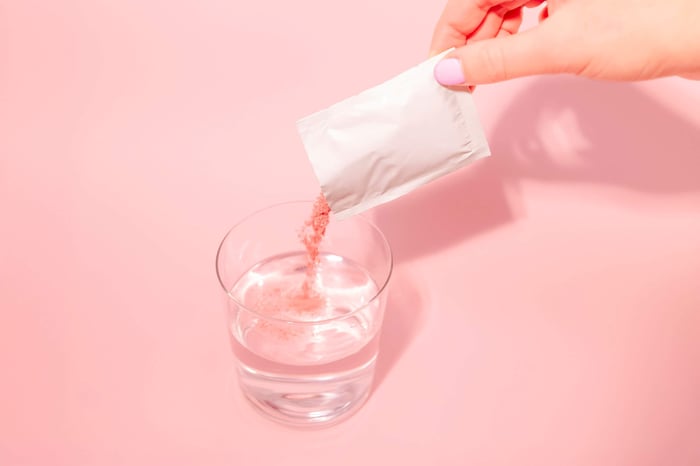
'She Juicy' is a hormone-free supplement made with spring-harvested slippery elm bark, designed to support your body's natural moisture from the inside out.
While you're managing perimenopause weight gain through strength, sleep, and nutrition, you might also be dealing with vaginal dryness — another perimenopause symptom that doesn't always get airtime.
Here's why this matters: Your estrogen drop affects your whole body, including vaginal tissue hydration. And there's a surprising connection between your gut and your estrogen levels. Your gut bacteria (your estrobolome) help regulate how much estrogen your body recycles. Support that system, and you're supporting moisture from the inside out.
'She Juicy' uses spring-harvested slippery elm bark — cold-processed to protect its active mucilage compounds. The mechanism is simple: slippery elm coats your gut lining, supports estrobolome function, and helps your body produce its own natural moisture again. No hormones. No topicals that wash away. Just plant-based support for what your body needs.
Individual results may vary, and this works best alongside the other moves you're making (strength training, sleep, nutrition).
Common Mistakes That Make It Harder
Restricting calories too aggressively. Your metabolism is already slowed. Going into a severe deficit just triggers more cortisol and muscle loss. Aim for moderate, sustainable changes.
Ignoring strength training. Cardio alone won't solve perimenopause weight gain because you're losing muscle at the same time you're burning calories. Strength is non-negotiable.
Not addressing sleep. You can nail diet and exercise, but if you're sleeping 5 hours a night, your hormones will sabotage you. Sleep comes first.
Thinking it's the same as weight loss at 40. It's not. Your body is different now. The strategies that worked then won't work now. You need to adapt.
Assuming it's forever. Once you're fully postmenopausal and your hormones stabilize (usually 5–8 years after your last period), the metabolic piece gets easier. This is a phase, not a life sentence.
When to See Your Doctor
If you're gaining weight despite consistent strength training, adequate sleep, and sound nutrition, get your thyroid checked (TSH, free T3, free T4, antibodies). Thyroid dysfunction is common during perimenopause and can absolutely drive weight gain.
Also mention to your doctor:
- Severe bloating or digestive changes
- Extreme fatigue that doesn't improve with sleep
- Any symptoms that make it hard to exercise or sleep
Your doctor can also discuss whether HRT or other medical support is right for you — but that's a separate conversation from the lifestyle changes that work at every hormone level.
FAQ
What about menopause weight gain — how to lose it?
Menopause weight gain follows the same principles as perimenopause weight gain: prioritize strength training, adequate protein, sleep, and stress management. The difference is that once you're fully postmenopausal (12+ months without a period), your hormones stabilize, and your metabolism often becomes slightly more predictable. You're still working against a slower baseline metabolism, but you're no longer fighting the monthly fluctuations. The effort is real, but it gets incrementally easier.
Sources
- Mayo Clinic. "Menopause Weight Gain: Stop the Middle-Age Spread." Mayo Clinic Staff. https://www.mayoclinic.org/healthy-lifestyle/womens-health/in-depth/menopause-weight-gain/art-20046058
- American College of Obstetricians and Gynecologists (ACOG). "The Menopause Years." Patient Education. https://www.acog.org
- Lipton, Riannon B., et al. "Estrogen Fluctuation and Vascular Function." Menopause, vol. 23, no. 8, 2016, pp. 841–849. PubMed Central.
- National Institutes of Health. "Estrobolome and Estrogen Metabolism." NIH Office of Dietary Supplements. https://ods.od.nih.gov
You've Got This
Perimenopause weight gain is frustrating, real, and solvable — but only if you stop blaming yourself and start working with your biology instead of against it.
Your body isn't broken. It's just different. And different requires a different strategy.
That means strength, sleep, protein, and patience. It means tuning out the advice that worked at 35. It means honoring that this is temporary — a phase with an endpoint — even though right now it feels permanent.
You don't have to white-knuckle your way through this alone.
Explore Our Products
Flower Power offers hormone-free supplements to help balance pH, eliminate odor, and increase moisture — all backed by our 90-day money-back guarantee.
These statements have not been evaluated by the Food and Drug Administration. This product is not intended to diagnose, treat, cure, or prevent any disease.