



Your Clothes Don't Fit — And It's Not Your Fault
You wake up and your jeans are tight. By afternoon, you look six months pregnant. You haven't changed what you eat, but suddenly your body is doing something it never did before.
That's perimenopause bloating. And I'm going to guess your doctor either dismissed it or said "that's just normal aging."
Here's what they should have said: your hormones are in free fall, and your gut is paying the price. This isn't your imagination. It's not permanent. And there are real things you can do about it.
What's Actually Happening With Perimenopause Bloating
Perimenopause bloating isn't the same as regular bloating. Regular bloating is usually about what you ate yesterday. Perimenopause bloating is about your hormones rewriting the rules.
Here's the chain reaction: as estrogen drops, your gut bacteria (called your microbiome) changes. Your gut lining gets thinner and more permeable. Digestion slows down. Gas builds up. Your abdomen swells — sometimes by inches — and it can last for days.
And because your hormones are fluctuating wildly (not gone yet, just erratic), some days are worse than others. This unpredictability? That's what makes women feel like they're going crazy.
The bloating can show up as:
- Abdominal distension (actual swelling, not just tightness)
- Constipation or diarrhea (sometimes both in the same week)
- Excessive gas or cramping
- Water retention in your abdomen, breasts, and extremities
- A feeling of fullness even when you haven't eaten much
It's not vanity. It's a real physical response to hormonal change. And you're not alone — over 70% of perimenopausal women report bloating as one of their top three complaints.
Why This Matters More Than You Think
Perimenopause bloating isn't just about fitting into your clothes (though that's real, and that anger is valid).
It affects your quality of life. You avoid going out because you don't know which body you'll wake up with. You feel disconnected from your own abdomen. You wonder if something is actually wrong with you.
Then there's the mental load: Did I eat too much? Am I getting fat? Is this bloating or am I pregnant? (No. You're not. But the brain doesn't care about logic when hormones are chaos.)
The other thing nobody tells you: if your gut health is compromised during perimenopause, you're also absorbing nutrients less efficiently. So you might feel more fatigue, brain fog, or mood swings — all things you're already dealing with.
Your gut isn't just a digestion machine. It's a hormone processor. It regulates inflammation. It affects your mood. It even influences how much natural moisture your body produces.
Ignoring perimenopause bloating isn't just uncomfortable — it's missing an opportunity to support your whole system during a major transition.
How Your Gut and Hormones Are Actually Connected
This is where it gets interesting.
Your gut bacteria (your estrobolome) does something most people don't know about: it helps regulate how much estrogen your body actually uses. When your estrobolome is healthy, it keeps estrogen in circulation longer. When it's disrupted — which happens during perimenopause — estrogen metabolism gets messy.
Low estrogen = slower digestion, less stomach acid, fewer beneficial bacteria.
This is why some women feel bloated even when they're eating less. Their guts are literally working harder for less reward.
The solution isn't starving yourself or doing another elimination diet. It's supporting your gut lining and your microbiome so digestion can work again.
Some women find relief through:
- Adding more soluble fiber (slowly — not all at once)
- Eating fermented foods like sauerkraut or kimchi
- Drinking more water and herbal teas
- Reducing inflammatory foods (usually sugar and processed stuff)
- Managing stress (cortisol makes bloating worse)
- Moving your body gently
But here's the thing: if your gut lining is already damaged, you might not absorb any of these things well. You need to heal the lining first.
Support Your Gut Lining From the Inside Out
One option worth exploring is addressing perimenopause bloating through gut health support.
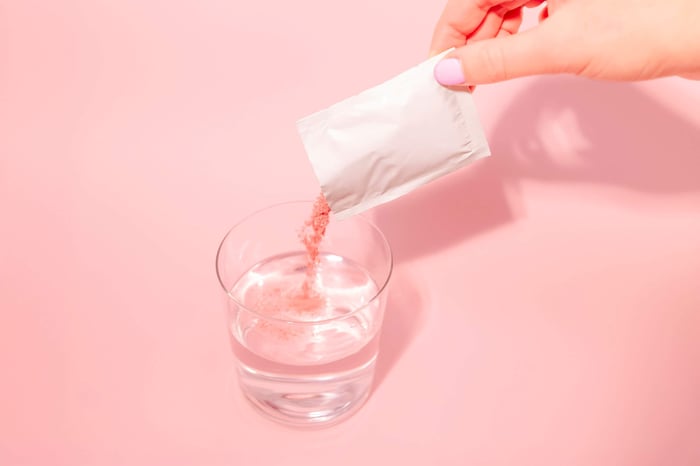
Enter slippery elm — a plant-based ingredient with a long history of supporting digestive health. Here's how it works: slippery elm contains mucilage, a substance that coats and soothes your gut lining. When your intestinal wall is protected, digestion improves, bloating decreases, and your estrobolome can actually do its job again.
This is inside-out healing, not outside-in symptom management.
Looking for natural moisture support?
'She Juicy' is a hormone-free supplement made with spring-harvested slippery elm bark, designed to support your body's natural moisture from the inside out.
What to Look For When You're Trying Solutions
Not all solutions work for everyone. But some things are worth trying before you assume perimenopause bloating is just your new normal.
Real changes take time. Your gut lining doesn't heal in three days. Give any intervention at least 4–6 weeks before you decide if it's working.
Track patterns. Start noticing: When is the bloating worst? What did you eat the day before? Where are you in your cycle (if you still have one)? Is there a pattern with stress or sleep? You'll learn more from a week of notes than from any test.
Don't try everything at once. If you change your diet, add supplements, and start exercising all in one week, you won't know what helped. Add one thing. Wait. Assess. Then add the next.
Water matters more than you think. Dehydration makes bloating worse, not better. Aim for half your body weight in ounces daily — more if you're exercising or it's hot.
Stress is not separate from bloating. Your nervous system controls your digestion. If you're tense, your gut is tense. Breathing, gentle yoga, or even a 10-minute walk can shift this more than you'd expect.
Common Mistakes That Make Perimenopause Bloating Worse
Cutting fiber suddenly. Yes, too much fiber at once makes bloating worse. But cutting it out entirely makes constipation worse. Add fiber slowly — like 2–3 grams per week — and with plenty of water.
Assuming you're lactose intolerant overnight. Estrogen helps you digest dairy. Lower estrogen = harder time with dairy. But this might be temporary, not permanent. Try reducing it for a month, then experiment again.
Eating too much "healthy" food at once. You know — the salad you eat for dinner because you want to be "good." Raw vegetables are harder to digest when your digestion is already compromised. Cook them. Roast them. Make them easier on your system.
Blaming yourself. This is not happening because you got lazy or "let yourself go." This is a predictable response to hormonal change. The self-judgment is making it worse, not better.
Ignoring the emotional toll. If perimenopause bloating is making you feel disconnected from your body or ashamed, that's worth addressing with a therapist or trusted person. You're grieving a body that's changing. That's real. Let it be real.
When to See Your Doctor
Perimenopause bloating is normal. But some bloating is not.
Talk to your doctor if:
- You have severe pain along with bloating
- The bloating started suddenly and isn't related to your cycle
- You're losing weight unintentionally
- You have blood in your stool
- You're vomiting regularly
- The bloating doesn't improve after 6–8 weeks of dietary changes
- You have a family history of ovarian or colon cancer
These could indicate something else. Your doctor can rule out conditions like IBS, celiac disease, endometriosis, or ovarian cysts.
If your doctor dismisses your experience without listening, it's okay to seek a second opinion. You deserve care that takes you seriously.
FAQ: Your Perimenopause Bloating Questions Answered
Can perimenopause bloating cause weight gain?
Not directly — but it looks like weight gain, and the frustration can lead to stress eating, which does cause weight gain. The bloating is real swelling, not fat. It comes and goes. Your actual weight might not change, but your jeans won't fit some days. This is maddening and normal.
How long does perimenopause bloating last?
Perimenopause itself lasts 4–10 years (average 7). Bloating is usually worst in the middle years when hormones are most erratic. Once you're postmenopausal for a year, bloating often improves — though some women deal with it longer if their gut health was already compromised.
Is bloating a sign that perimenopause is ending?
Not necessarily. Bloating can happen at any stage. Some women get worse bloating as they transition to postmenopause. Others feel relief once their hormones stabilize. There's no universal timeline.
Can I reduce perimenopause bloating without changing my diet?
Partially. Stress reduction, gentle movement, and staying hydrated help. But your gut is struggling, so supporting it through nutrition (or gut-healing supplements) will make a bigger difference than lifestyle alone. The combination is strongest.
Is perimenopause bloating worse if I had IBS before?
Yes. If your gut was already sensitive, perimenopause hits harder. The good news: this is your chance to actually heal your gut instead of just managing symptoms. Many women find that supporting their gut during this transition improves their IBS long-term.
You're Not Overreacting
Your body is going through something real. The bloating is measurable. The frustration is legitimate. The fact that you can gain three inches around your waist by 3 p.m. is not a sign of weakness or failure.
You're managing a major hormonal transition in a body that's no longer playing by the old rules.
Perimenopause bloating responds to support: good digestion, gut healing, stress management, and time. Not perfection. Not punishment. Support.
Start with one small change. Notice what happens. Add another. You'll figure out what your body needs better than anyone else can tell you.
Explore Our Products
Flower Power offers hormone-free supplements to help balance pH, eliminate odor, and increase moisture — all backed by our 90-day money-back guarantee.
These statements have not been evaluated by the Food and Drug Administration. This product is not intended to diagnose, treat, cure, or prevent any disease.
Sources
- Mayo Clinic. "Perimenopause." https://www.mayoclinic.org/healthy-lifestyle/womens-health/in-depth/perimenopause/art-20046133
- Harvard Health Publishing. "The Estrobolome and the Role of the Microbiome in Estrogen Metabolism and Hormone-Related Diseases." https://www.health.harvard.edu
- American College of Obstetricians and Gynecologists (ACOG). "Perimenopause: Transition to Menopause." https://www.acog.org
- NIH National Institute on Aging. "Menopause: What to Expect." https://www.nia.nih.gov/health/menopause