



You've Tried Everything. Here's What Actually Happens.
Your doctor probably didn't explain this. You've dealt with the itching, the discharge, the smell — and you've googled "why is this happening to me?" at 2 a.m. more times than you want to admit.
You've tried creams. Probiotics. Things that promised "clinically proven relief" but just made you feel... sticky. And now someone's telling you about boric acid suppositories, but you want to actually understand how boric acid suppositories work before you put anything else down there.
Smart. Let's talk about what's actually happening inside your body, why boric acid matters, and whether it's the right move for you.
What Boric Acid Suppositories Actually Are
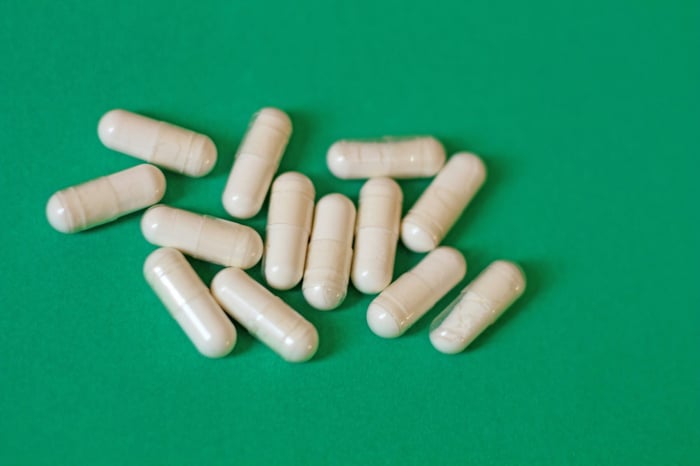
Boric acid suppositories are small capsules you insert vaginally — usually at night — that dissolve and release boric acid directly into your vaginal canal.
That's it. It's not a drug. It's a mineral compound (naturally occurring, mined from the earth) that's been used for vaginal pH support for over a century. The FDA recognizes boric acid as a vaginal antiseptic, and while it's not FDA-approved as a treatment for any specific condition, it's widely used for pH balancing.
A standard dose is typically 600mg per capsule. You use it for a specific period (usually 7-14 days depending on your situation), not indefinitely.
Why pH Matters (And Why Your Doctor Might Not Have Explained This)
Your vagina is supposed to be acidic. Specifically, a pH of 3.8 to 4.5.
That acidic environment is YOUR defense system. It keeps problematic bacteria and yeast in check naturally — without you doing anything. But when your pH rises above 4.5 (becomes less acidic, or "more alkaline"), that balance tips. The bacteria that shouldn't be thriving suddenly have permission to multiply.
This happens postmenopause. Estrogen drops, your vaginal tissue thins, and your natural acidity decreases. It's not a character flaw. It's biochemistry.
Irritation, odor, discharge, frequent infections — they're all symptoms of pH imbalance, not moral failures. Your body is just working with less estrogen and needs a little support.
How Boric Acid Suppositories Work: The Mechanism
Here's the part your pharmacist glossed over.
Boric acid is weakly acidic. When the suppository dissolves in your vaginal canal, it releases boric acid that directly lowers the pH of your vaginal environment — bringing it back into that protective 3.8 to 4.5 range.
A lower pH creates an environment where problematic bacteria (like those that cause bacterial vaginosis) and certain yeast strains struggle to survive. Your lactobacillus — the "good" bacteria that naturally live in your vagina — actually prefer that acidic environment and can rebalance more easily.
You're not killing anything aggressively. You're restoring the conditions where your body's natural defenses can work again.
The boric acid doesn't get absorbed systemically (into your bloodstream in meaningful amounts). It stays local, does its job, and you excrete it. That's why it's considered safe for vaginal use when used as directed — and why it's a popular choice for women who can't or won't use hormonal treatments.
How Often to Use Boric Acid Suppositories (And What to Expect)
Most women insert one suppository nightly for 7 to 14 days, depending on what they're addressing.
Some insert twice daily for the first few days if symptoms are acute. Others use one per night for a week, then assess. The exact protocol depends on your situation — which is why talking to your healthcare provider before starting matters.
You'll likely notice results within 3-5 days: less itching, clearer discharge, less odor. But full pH rebalancing can take the full 7-14 days. Your vaginal microbiome doesn't shift overnight.
Individual results may vary. Some women feel relief after 3 days. Others need the full two weeks. Patience is part of the protocol here.
When to Look for Quality (And What Actually Matters)
Not all boric acid suppositories are created equal.
You want:
- 600mg dosage — this is the standard effective dose
- GMP-certified manufacturing — means the facility follows strict quality standards
- 3rd party tested — independent verification of what's actually in the capsule
- Made in the USA — more regulatory oversight, clearer supply chain
Cheap boric acid from questionable sources might be underdosed, contaminated, or just ineffective. You're putting this inside your body. Spend the extra few dollars for the real thing.
Want to support your vaginal pH naturally?
Flower Power's boric acid suppositories are GMP-certified, made in the USA, and trusted by thousands of women.
Common Mistakes Women Make With Boric Acid
Using it as a long-term daily supplement. Boric acid is for short-term pH support during a specific issue, not a maintenance product. Overuse can disrupt your microbiome in the opposite direction.
Stopping too early. You feel better on day 4, so you stop. Then it comes back. Finish the full course (7-14 days) even after symptoms improve. Your pH needs time to fully rebalance.
Using it during pregnancy. Don't. There isn't enough safety data. If you're pregnant or think you might be, talk to your OB first.
Ignoring recurrent infections. If you're needing boric acid suppositories every month, something else is going on — dietary triggers, a partner's microbiome, an underlying condition. See your doctor. Boric acid supports pH, but it's not a long-term fix for chronic issues.
Using it after every sexual encounter. This isn't prevention. It's treatment. Use it when you have symptoms or as directed by your healthcare provider.
When to See Your Doctor
Boric acid supports vaginal pH balance, but it's not a replacement for medical evaluation.
Talk to your doctor if:
- You've never had these symptoms formally diagnosed (you could have something that boric acid won't help)
- Symptoms persist after a full 14-day course
- You're experiencing fever, pelvic pain, or bleeding alongside discharge
- You're pregnant or breastfeeding
- You're on medications that might interact (though boric acid has few drug interactions)
- You're a cancer survivor on any hormone-related treatment (consult your oncologist before use)
Your healthcare provider isn't the enemy here. They're the person who can actually examine you and rule out things that look like simple pH imbalance but aren't.
FAQ: Your Boric Acid Questions Answered
How often should I use boric acid suppositories?
The standard protocol is one 600mg suppository inserted vaginally each night for 7 to 14 consecutive days. Some women use two per day for acute symptoms during the first few days, then reduce to once daily. Always follow the label directions or your healthcare provider's guidance — don't use indefinitely or as a daily preventive supplement.
How long does boric acid take to work?
Most women notice improvement in itching and odor within 3 to 5 days of starting. However, full pH rebalancing and clearing discharge can take the entire 7 to 14 days. If you see no improvement after a week, or if symptoms worsen, stop and contact your healthcare provider — you may need a different approach.
The Bottom Line
Boric acid suppositories work by restoring your vaginal pH to the acidic range where your body's natural defenses can function again.
They're not magic. They're not a long-term solution if something deeper is going on. But for pH-related symptoms in a postmenopausal body, they're effective, hormone-free, and backed by decades of use and recent research supporting their safety when used as directed.
Understanding how boric acid suppositories work — and using them correctly — means you're taking an active role in your body's health. That matters.
Explore Our Products
Flower Power offers hormone-free supplements to help balance pH, eliminate odor, and increase moisture — all backed by our 90-day money-back guarantee.
These statements have not been evaluated by the Food and Drug Administration. This product is not intended to diagnose, treat, cure, or prevent any disease.
Sources
- National Institutes of Health (NIH). "Vaginal Microbiota and the Role of Lactobacillus in Health and Disease." PubMed Central, 2023. https://www.ncbi.nlm.nih.gov/
- American College of Obstetricians and Gynecologists (ACOG). "Vaginitis." ACOG Practice Bulletins, 2020.
- Mayo Clinic. "Bacterial Vaginosis: Symptoms and Causes." https://www.mayoclinic.org/
- Sobel, J. D., et al. "A Review of Intravaginal Boric Acid as an Antifungal and Antibacterial Agent." Current Infectious Disease Reports, 2015.